
 The Crossbill Team
Labani Jangi, a 34-year-old researcher and painter from Nadia district, West Bengal, has been honoured as the first recipient of the T.M. Krishna-PARI Award.
The annual award, established to celebrate the intersection of art and journalism, recognizes individuals whose storytelling amplifies the struggles and resilience of marginalized communities.
The People’s Archive of Rural India (PARI), in an announcement, praised Labani's work for its powerful portrayal of rural India, blending artistic creativity with incisive social commentary.
Currently pursuing a PhD at the Centre for Studies in Social Sciences, Kolkata, Labani focuses her research on Bengali migrant labour.
Labani’s journey as an artist began in childhood but took a transformative turn in 2016. Troubled by rising majoritarianism, mob lynching, and the persecution of minorities, she turned to painting as a refuge.
“There was an intense feeling of unease. I used to love writing till that time, and had written and published a few articles in Bangla. But suddenly language felt completely inadequate. I wanted to run away from everything then. That is when I started painting. I would paint the sea in all its moods, in water colours, on every little piece of paper I could find. One after the other, I did so many paintings of the sea at that time [2016-17]. To paint was my way of finding peace in an otherwise turbulent world,” she shared with PARI.
A self-taught artist, Labani views her art as inherently political, deeply influenced by her identity as a Muslim woman.
“The world does not want to acknowledge us, our skills, our talents, our hard work. Our identity plays a huge part in this erasure. This continues even today. The work, especially of a Muslim woman artist, does not even exist for a large number of people,” she remarked.
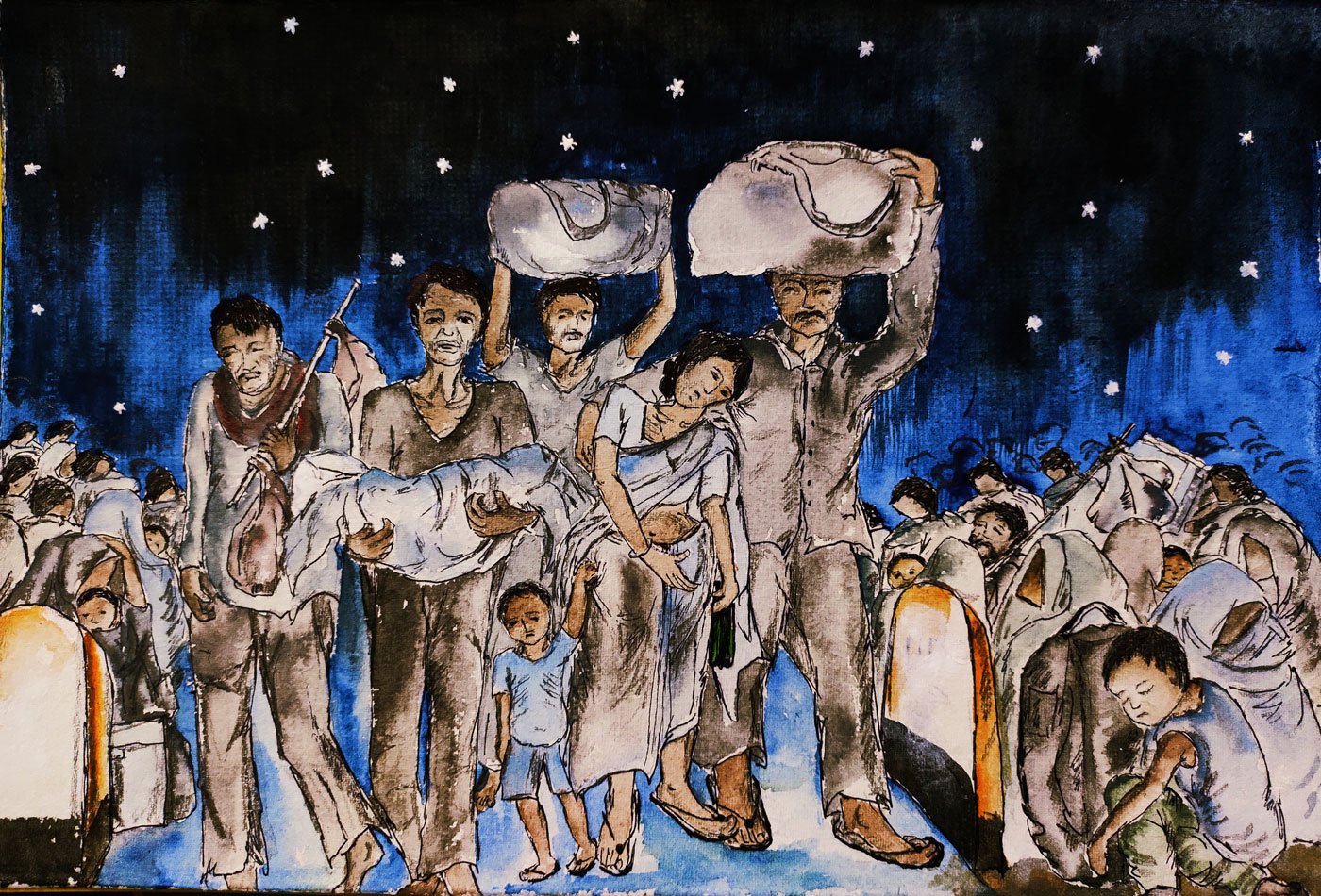 An illustraion by Labani Jangi. Photo: X/@LeherIndia
Labani’s association with PARI began in 2020 as a fellow, where she captured the lived experiences of rural communities through her art.
“My work with PARI focuses on both the systemic challenges, and the enduring spirit of rural life. By integrating these narratives into my art, I try to create visual expressions that resonate with the complexities of their lives. My illustrations are a medium through which I contribute to preserving and sharing the rich diversities of cultural and social realities in rural India,” she said.
Speaking on the role of art as protest, Labani emphasized its ability to convey potent messages with subtlety.
“In a world where political discourse often aligns with destruction, my paintings speak a softer but equally potent language of protest and resilience,” she added.
The award not only highlights Labani’s artistic and academic pursuits but also underscores the critical importance of storytelling that centers on marginalized voices, making her a trailblazer in the fields of art and social advocacy.
The annual award, established to celebrate the intersection of art and journalism, recognizes individuals whose storytelling amplifies the struggles and resilience of marginalized communities.
The People’s Archive of Rural India (PARI), in an announcement, praised Labani's work for its powerful portrayal of rural India, blending artistic creativity with incisive social commentary.
Currently pursuing a PhD at the Centre for Studies in Social Sciences, Kolkata, Labani focuses her research on Bengali migrant labour.
Labani’s journey as an artist began in childhood but took a transformative turn in 2016. Troubled by rising majoritarianism, mob lynching, and the persecution of minorities, she turned to painting as a refuge.
“There was an intense feeling of unease. I used to love writing till that time, and had written and published a few articles in Bangla. But suddenly language felt completely inadequate. I wanted to run away from everything then. That is when I started painting. I would paint the sea in all its moods, in water colours, on every little piece of paper I could find. One after the other, I did so many paintings of the sea at that time [2016-17]. To paint was my way of finding peace in an otherwise turbulent world,” she shared with PARI.
A self-taught artist, Labani views her art as inherently political, deeply influenced by her identity as a Muslim woman.
“The world does not want to acknowledge us, our skills, our talents, our hard work. Our identity plays a huge part in this erasure. This continues even today. The work, especially of a Muslim woman artist, does not even exist for a large number of people,” she remarked.
An illustraion by Labani Jangi. Photo: X/@LeherIndiaLabani’s association with PARI began in 2020 as a fellow, where she captured the lived experiences of rural communities through her art.
“My work with PARI focuses on both the systemic challenges, and the enduring spirit of rural life. By integrating these narratives into my art, I try to create visual expressions that resonate with the complexities of their lives. My illustrations are a medium through which I contribute to preserving and sharing the rich diversities of cultural and social realities in rural India,” she said.
Speaking on the role of art as protest, Labani emphasized its ability to convey potent messages with subtlety.
“In a world where political discourse often aligns with destruction, my paintings speak a softer but equally potent language of protest and resilience,” she added.
The award not only highlights Labani’s artistic and academic pursuits but also underscores the critical importance of storytelling that centers on marginalized voices, making her a trailblazer in the fields of art and social advocacy.


Comments (0)
Leave a Comment